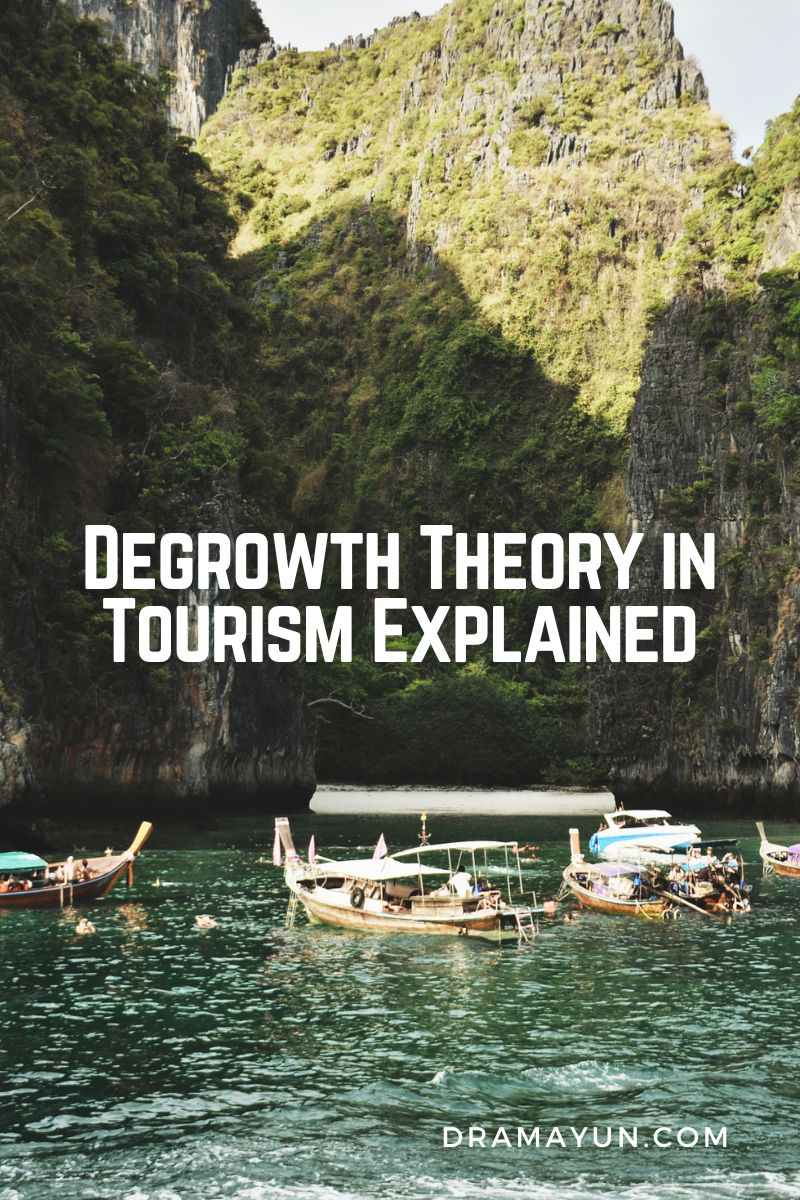
Degrowth Theory in tourism development is a radical alternative to conventional tourism growth models. It challenges the idea that endless growth in tourism is beneficial and instead advocates for reducing tourism activities to achieve sustainability, social equity, and environmental conservation.
This theory is rooted in degrowth economics, which argues that economic growth is not always positive and that societies should focus on well-being, ecological balance, and community resilience rather than just increasing profits and tourist numbers.
Degrowth in tourism suggests that overtourism, environmental degradation, cultural erosion, and economic inequalities can be solved by reducing the scale of tourism and prioritizing sustainable, community-based alternatives.
Degrowth Theory promotes smaller-scale, localized, and sustainable tourism rather than mass tourism and overdevelopment. It is based on several core ideas:
1. Reducing the scale of tourism by
- encouraging fewer tourists instead of more
- limiting mass tourism to prevent environmental and social harm
- prioritizing quality tourism experiences over quantity
For example, Bhutan’s “High-Value, Low-Impact” tourism model restricts visitor numbers by charging high fees, ensuring sustainability.
2. Prioritizing local communities over profit by
- ensuring that tourism activities should benefit local communities first and not corporations
- encouraging community ownership of tourism businesses
- reducing economic leakage by keeping profits within local economies
For example, community-based tourism (CBT) in Nepal allows locals to host tourists, preventing wealth concentration in foreign-owned hotels.
3. Environmental conservation over economic growth by
- limiting tourism activities that cause pollution, deforestation, and resource depletion
- encouraging ecotourism and regenerative tourism instead of mass tourism
- promoting low-carbon travel options like biking and public transport
For example, Amsterdam reduced tourist promotions to combat over-tourism and protect local quality of life.
4. Decentralization and local Governance
- Encourages local governments and communities to manage tourism instead of national or international corporations.
- Empowers small-scale, ethical tourism businesses.
- Limits the influence of multinational hotel chains, cruise companies, and global travel agencies.
For example, Barcelona imposed stricter regulations on Airbnb to control tourism-driven housing displacement.
5. Alternative Economic Models in Tourism
- Moves away from a profit-driven economy towards a well-being-centered economy.
- Encourages barter, cooperative ownership, and slow tourism.
- Reduces dependency on tourism as the main economic driver.
For example, Venice promoted alternative industries (e.g., arts and crafts) to reduce reliance on mass tourism.
The Problems with Growth-Based Tourism
1. Environmental Damage from Over-Tourism
- Mass tourism leads to air pollution, plastic waste, and destruction of natural habitats.
- Cruise ships, air travel, and luxury hotels have high carbon footprints.
For example, Bali faces severe water shortages due to overuse by hotels, golf courses, and resorts.
2. Cultural Erosion and Gentrification
- Local cultures are commercialized and diluted to fit tourist expectations.
- Tourism-driven real estate inflation displaces local residents.
For example, Lisbon faces a housing crisis because short-term tourist rentals push locals out.
3. Economic Inequality and Labor Exploitation
- Most tourism profits go to foreign corporations, not local communities.
- Tourism jobs are often low-paid, seasonal, and precarious.
For example, Mexico’s tourism sector benefits foreign investors, while local workers struggle with low wages.
4. Dependence on Tourism as an Economic Trap
- Many countries over-rely on tourism, making them vulnerable to global crises (e.g., COVID-19 pandemic).
- Sudden drops in tourism lead to economic collapses.
For example, The Maldives’ economy crashed during COVID-19, exposing its overdependence on tourism.
Strategies for Degrowth in Tourism
1. Limiting Mass Tourism
- Caps on tourist numbers in sensitive areas.
- Higher taxes on luxury tourism (e.g., cruise ships, high-emission flights).
- Banning environmentally harmful tourism practices (e.g., all-inclusive resorts that overuse water and energy).
For example, Machu Picchu introduced visitor quotas to protect archaeological sites from over-tourism.
2. Encouraging Slow and Sustainable Tourism
- Promotes longer stays with fewer visitors, reducing environmental impact.
- Encourages local travel, cultural immersion, and low-impact activities.
- Supports walking, cycling, and public transport over high-emission transport.
For example, Italy’s “Slow Food” and “Slow Tourism” movements encourage sustainable travel.
3. Supporting Community-Based Tourism
- Ensures local people own and manage tourism businesses.
- Supports small-scale accommodations over large resorts.
- Encourages tourist spending in local markets.
For example, Thailand’s community-based homestays promote sustainable tourism income.
4. Promoting Alternative Economic Sectors
- Encourages local industries (agriculture, arts, education) instead of over-relying on tourism.
- Develops economic resilience by investing in diverse sectors.
For example, Iceland invested in technology and renewable energy after the 2008 financial crisis to reduce its reliance on tourism.
Criticisms and Challenges of Degrowth in Tourism
1. Economic Trade-Offs
- Reducing tourism can harm economies that depend on it.
- Governments may resist degrowth policies due to lost tax revenues.
- Jobs in tourism may decline, affecting workers in hotels, transport, and restaurants.
2. Difficulty in Implementation
- Enforcing tourist caps and restrictions can be politically unpopular.
- Corporate resistance from powerful hotel chains and airlines.
- Tourists may seek cheaper destinations, harming local businesses.
3. Accessibility Issues
- Degrowth strategies (e.g., high entry fees, quotas) may make tourism less accessible to budget travelers.
- Risk of elitist tourism, where only wealthy travelers can afford to visit protected destinations.
For example, Venice’s planned entry fee system has been criticized for excluding budget travelers.
Conclusion
Degrowth Theory in tourism challenges the traditional model of endless growth, arguing that less tourism can lead to better social, economic, and environmental outcomes. It promotes sustainability, local empowerment, and reduced environmental impact, ensuring that tourism benefits both current and future generations. The future of tourism must move beyond profit-driven models and towards an approach that prioritizes planetary health, cultural integrity, and community well-being.

 Dominic Rielo Amayun